

Social and emotional development
Sounds can have a significant impact on a child’s social and emotional development. Sounds can serve as a tool for regulating mood, enhancing the ability to show empathy and engage in communities.
Through sounds, rhythm and music, children can develop their emotional intelligence, including self-regulation, self-confidence and a sense of belonging.
Sound-based pedagogy involves the deliberate use of sounds in learning. By incorporating the three elements of pitch, volume and rhythm into classroom activities, you can improve children’s executive functions and their social and emotional learning. It is interesting how we explore the sounds. The sound of a wolf can be scary for some people, and others feel fascinated
Sounds – more than music
It is important not to think of sounds solely as music. Sounds are something more fundamental than music. For example, when you hear a car honking, a bird chirping or a dog barking. Sounds are everywhere. They are part of environment, and children love making sounds. When you, as a professional, actively work with sounds and break them down into pitch, volume and duration, it has an effect on children’s executive functions; they are encouraged to think more creatively and with greater flexibility.
The role of educators and teachers
When you work with different rhythms by clapping your hands or playing simple percussion instruments, you teach the children to follow instructions, while they develop their executive functions such as self-control and working memory.
You can use soundscapes to talk with children about the mood of an audio clip, and whether the people speaking sound happy, angry, sad or bored. This can help develop their understanding of how emotions can be sensed or heard through tone of pitch, volume and duration in their voices. It can help children recognise emotions, put words to how they feel and move forward.
You can ask children to say sentences with different emotions. For example, ‘I see a cat’ – as they were happy, sad, frightened, laughing or crying.
Empathy
You can also help develop children’s ability to empathise with other children by playing audio clips where children are angry, crying or cheering, and then discuss why the child in the clip might feel that way. This can lead to a conversation about what might have happened – perhaps a dog has died, someone has received a present, or someone has hurt themselves. This develops children’s ability to think abstractly.
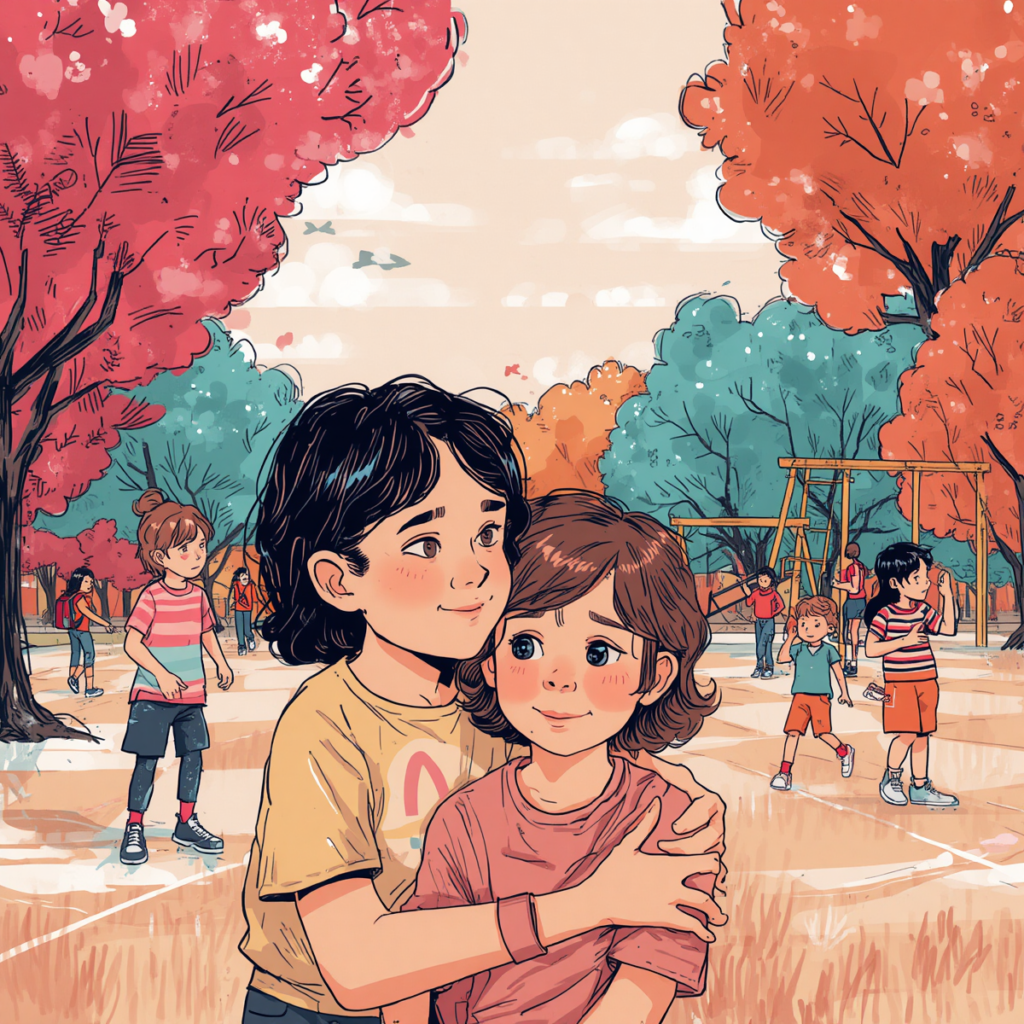
A child is comforting another child, generated with Canva AI
Key outcomes
- Through sounds, rhythm and music, children can develop their emotional intelligence, including self-regulation, self-confidence and a sense of community.
- When working with different rhythms, you teach children to follow instructions, and they practise executive functions such as self-control and working memory.
- By talking to children about the moods in sound clips, you can help them develop their understanding of how to sense or hear others’ emotions in the pitch, volume and tempo of their voices.
Resources
- Hassler, Lisa R., The Brighter Side of Education: Research, Innovation & Resources (podcast), Dr. Lisa R. Hassler, accessed 6 July 2026.


