
Types of sound-based activities for literacy: recording

Image generated by AI.
The use of sound and recordings can be highly advantageous early in the school process, even in kindergartens with equipment for simple recordings.
Example of a lesson
The students will have to work with the letter sounds /S/, /M/ and /A/
- The teacher gives a letter or the sound e.g. /M/
- The student has to say words that start with the sound (e.g. mother, milk, mouse)
- The students record their voices on a tablet, stereo microphone or phones
- The students will listen to the recording afterwards
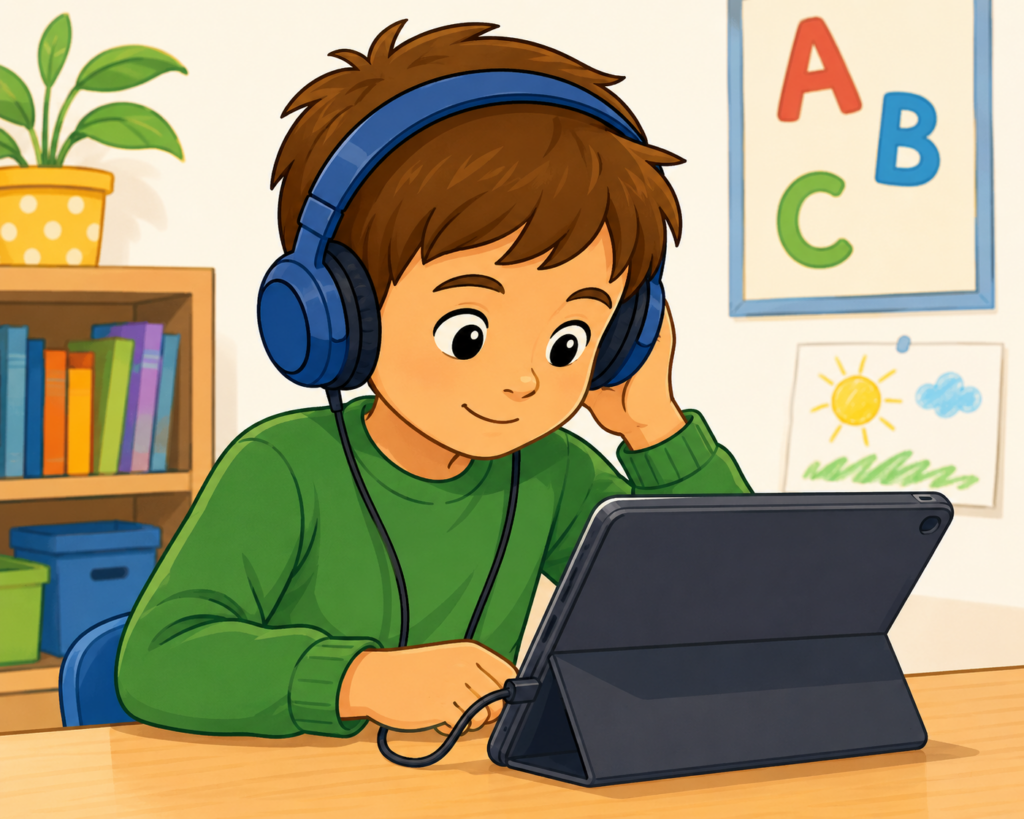
Image generated by AI.
The class or another student gives feedback
- Was the sound clear?
- Does the word start correctly with the sound?
Purpose behind this activity
- Develop phonological awareness
- Improve pronunciation and sound recognition
- Strengthen self-reflection through recording, listening and the subsequent conversation with the partner or class
Variations
- Students can record a short story focusing on specific sounds
- “Guess the sound”: other students listen and guess what sounds/words are being said
- Work in pairs → one recorder, one assessment
Why does it work?
When students hear their own voice, they become more aware of:
- How sounds are formed
- The difference between right and wrong pronunciations
- It is very motivating for the students to work with their own recordings
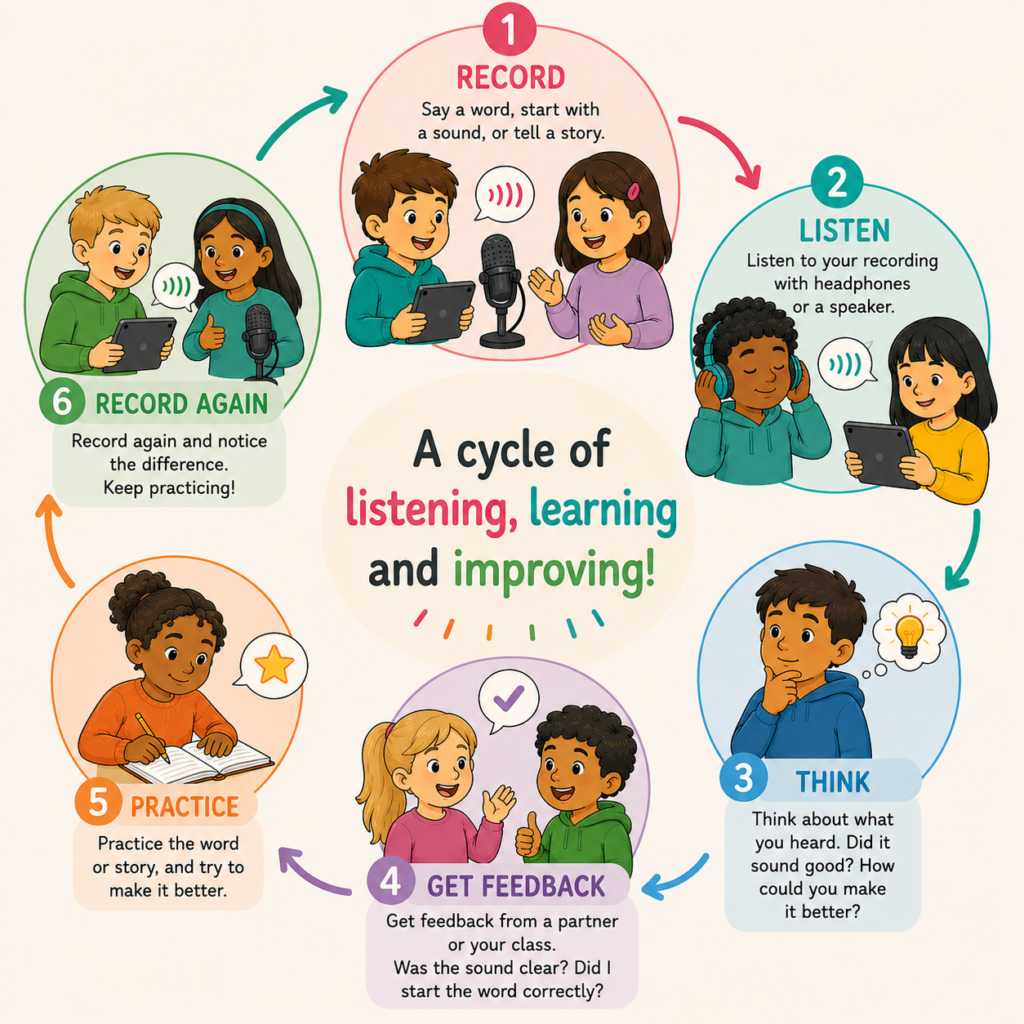
Image generated by AI.
Key outcomes
- Recordings are usable for early teaching of literacy
- The recordings can develop the students’ phonological awareness in a natural way
- Using their own recordings can be very motivating towards the teaching and the students’ experience of participation.
Resources
- Ehri, L. C., Nunes, S. R., Willows, D. M., Schuster, B. V., Yaghoub-Zadeh, Z., & Shanahan, T. (2001). Phonemic awareness instruction helps children learn to read: Evidence from the National Reading Panel’s meta-analysis. Reading Research Quarterly, 36(3), 250–287.
- Gillon, G. T. (2018). Phonological Awareness: From Research to Practice (2nd ed.). Guilford Press.
- Robin, B. (2016). The Power of Digital Storytelling to Support Teaching and Learning. Digital Education Review, 30, 17–29.


